
The Future of Money Management: AI Prompts for Budgeting, Investing, and Financial Planning
December 9, 2025
Prompting for AI Video Generation: A 2026 Guide to Sora, Runway & Pika
December 16, 2025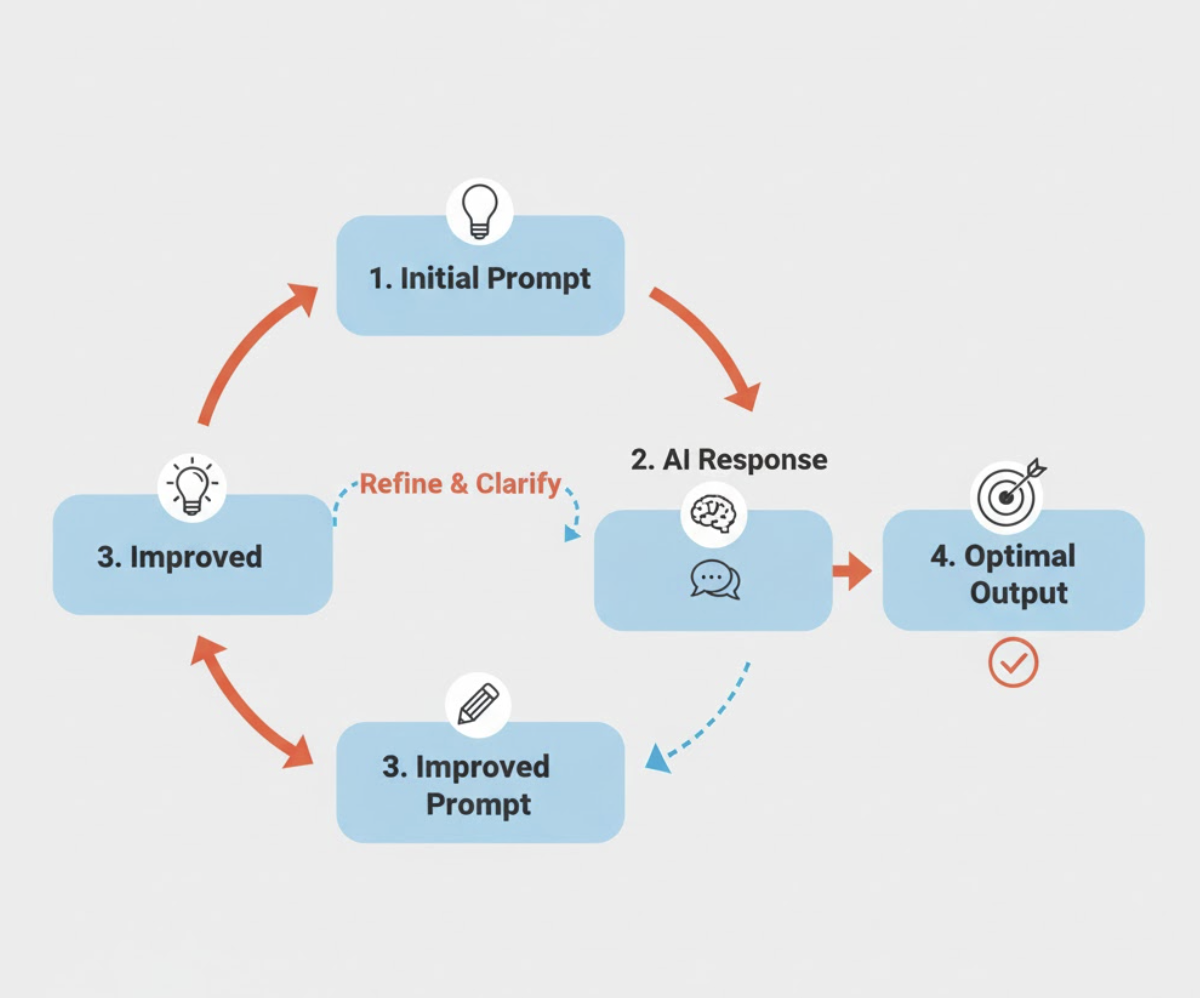
Introduction: The Age of the AI Whisperer
In 2025, it’s no longer enough to simply use AI — the real magic lies in communicating with it. The people who’ve mastered this skill are known as AI Whisperers — the modern-day translators between human creativity and machine intelligence.
Whether they’re designing creative marketing workflows, coding assistants, or building personalized chatbots, these individuals are redefining what’s possible with tools like ChatGPT, Claude, and Gemini.
But how do they do it? What separates a casual user from a true AI Whisperer? And how can you learn their techniques?
Let’s explore real-world case studies and uncover the frameworks, tools, and mindsets behind the world’s best prompt engineers — and how My Magic Prompt can help you join their ranks.
What Makes an AI Whisperer?
An AI Whisperer is someone who understands not just what to ask AI, but how to ask it.
They use structured, intentional prompting — combining creativity, logic, and empathy — to guide AI toward high-quality results. Instead of typing random queries, they treat prompting as a skillset: a mix of clarity, context, and iteration.
The 3 Core Skills of AI Whisperers:
| Skill | Description | Example |
|---|---|---|
| Clarity | Writing clear, specific instructions to reduce confusion. | “Summarize this report into three actionable insights for a CEO.” |
| Context | Giving AI the right background info to enhance results. | “You’re a productivity coach helping remote workers optimize their time.” |
| Iteration | Refining prompts based on responses for continuous improvement. | “Rephrase this to sound more empathetic but still professional.” |

Case Studies: The World’s Leading AI Whisperers
🧠 Case Study 1: The Marketing Strategist Who Tripled Content Output
Challenge: A digital marketing lead struggled with scaling high-quality blog content without losing brand voice.
Approach: Using role-based prompting, she instructed AI:
“You’re a seasoned SaaS copywriter. Write an SEO-optimized blog post on productivity tools for startups, using friendly yet data-backed tone.”
Results: The workflow, refined in My Magic Prompt’s Prompt Builder, produced polished first drafts in minutes. The team’s content velocity tripled, while maintaining brand consistency.
Takeaway: Framing the AI’s role dramatically improves quality and tone.
💡 Case Study 2: The Educator Turning AI into a Teaching Assistant
Challenge: An online educator wanted to personalize lesson plans for hundreds of students.
Approach: By creating dynamic prompt templates — such as:
“Generate a personalized learning plan for a high school student struggling with algebra. Include interactive exercises.”
She used My Magic Prompt’s Template Library to store and reuse custom prompts for each student profile.
Results: Lesson prep time dropped from 4 hours to 30 minutes per class. Students reported higher engagement due to personalized learning paths.
Takeaway: Reusable prompt templates = scalable personalization.

🚀 Case Study 3: The Startup Founder Who Built a Virtual Co-Founder
Challenge: A solopreneur needed strategic support but couldn’t afford a consultant.
Approach: They trained ChatGPT with a prompt framework:
“You are my AI co-founder specializing in startup strategy. Evaluate new business ideas based on market potential, differentiation, and scalability.”
Using Magic Prompt’s Chrome Extension, they instantly generated and tested multiple startup ideas daily.
Results: Within three weeks, they validated a profitable idea — saving months of manual research.
Takeaway: Strategic prompting can turn AI into a high-value thinking partner.
Prompt Frameworks from AI Whisperers
Here are three powerful frameworks top prompt engineers use:
1. The Role + Goal + Context Framework
“You are [ROLE]. Your goal is [OBJECTIVE]. Here’s the context: [DETAILS].”
2. The Step-by-Step Chain Framework
“List your reasoning before answering. Explain each step clearly.”
3. The Feedback Loop Framework
“Here’s your previous output. Refine it based on this feedback: [NOTES].”
These frameworks turn vague ideas into repeatable, high-performance workflows — something My Magic Prompt helps automate and organize with ease.
FAQs: Becoming an AI Whisperer
1. What’s the difference between a good and bad AI prompt?
A good prompt is specific, structured, and goal-driven. A bad prompt is vague or lacks direction.
2. How can I organize my best prompts?
Use My Magic Prompt’s Prompt Library to save, categorize, and reuse your top-performing prompts.
3. What tools do AI Whisperers use daily?
Tools like ChatGPT, Claude, Gemini — enhanced by My Magic Prompt — streamline experimentation and iteration.
4. How do I train AI to understand my brand voice?
Include tone examples and content samples in your prompts. For example: “Write in a friendly, mentor-like tone using short, punchy sentences.”
5. Can I turn my AI workflows into templates?
Yes — that’s exactly what My Magic Prompt’s Prompt Builder is for.
6. How long does it take to master prompting?
Most users improve dramatically within weeks by iterating, documenting, and reusing prompts strategically.
Conclusion: The Future Belongs to AI Whisperers
AI isn’t replacing creative thinkers — it’s amplifying those who know how to speak its language.
By studying the world’s top prompt engineers, you can learn how to craft smarter instructions, automate workflows, and build your own AI toolkit.
✨ Ready to level up? Explore My Magic Prompt — your creative partner for mastering the art of prompting, with tools, templates, and insights built for the next generation of AI Whisperers.