

The 4 Prompt Frameworks to Master Storytelling with AI
June 8, 2026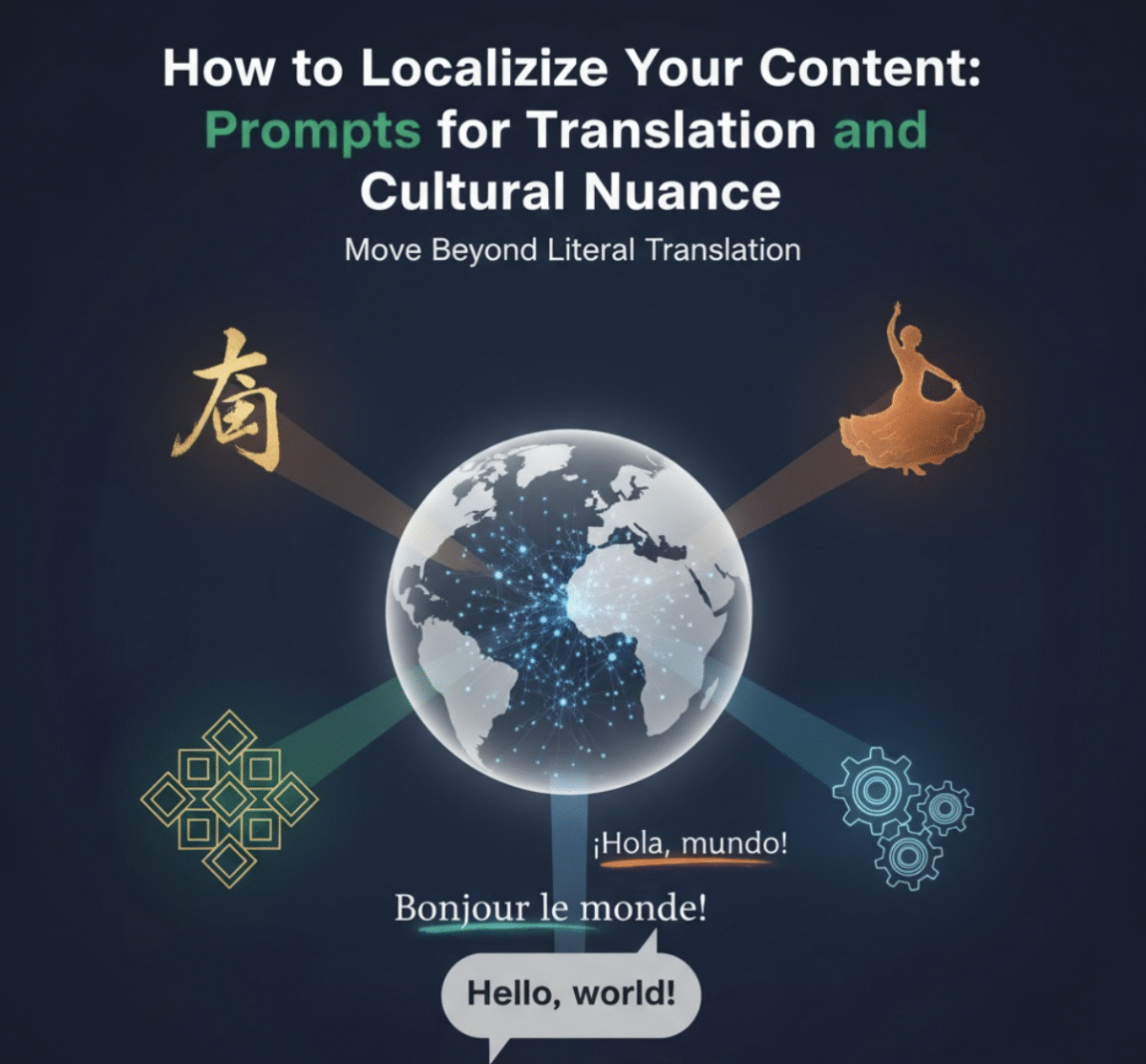
✍️ Introduction: When “Translate” Isn’t Enough
If you’ve ever asked AI to translate marketing copy or product descriptions, you know the problem: it’s accurate—but flat. The words are correct, yet the feeling is lost. Humor doesn’t land. Idioms fall apart. A slogan that shines in English sounds stiff in Japanese or Spanish.
That’s because true localization isn’t just translation—it’s cultural adaptation. And with the right prompts for translation, you can guide AI to capture not just what your message says, but how it feels.
In this guide, you’ll learn:
- How to prompt AI for tone, style, and cultural context
- Example prompts for translating marketing content, dialogue, and UX copy
- How My Magic Prompt can make localization faster and more consistent for global teams

🌍 The Difference Between Translation and Localization
Translation = transferring meaning from one language to another.
Localization = translating while adapting tone, idioms, humor, and references to fit the target culture.
For example:
English: “Save big this Black Friday!”
Literal Translation (French): “Économisez beaucoup ce vendredi noir.”
Localized Version: “Profitez des meilleures offres du Vendredi Fou !”
Localization adjusts for cultural expectations—so your message feels native, not translated.
AI tools like ChatGPT or Claude can help, but only if you give them the right context and instructions. That’s where smart prompting comes in.
💡 4 Prompt Techniques for Smarter Translation and Localization
Below are four frameworks you can use to transform simple translations into culturally rich, emotionally resonant copy.
1. Contextual Prompts: Add the Backstory
AI needs context to make smart linguistic decisions. Instead of just asking:
“Translate this into Japanese.”
Try:
“You are a professional translator localizing English marketing copy for a Japanese audience. Maintain a friendly but respectful tone, similar to how Japanese tech brands communicate. Here’s the text: [insert text].”
💬 Result: The translation will reflect the brand voice, not just the words.
Example prompt:
Act as a localization expert. Translate the following text into Spanish for a tech-savvy millennial audience. Keep it energetic, modern, and culturally natural. Text: [insert text]
2. Tone and Voice Prompts: Match Brand Personality
If your brand has a distinct tone, specify it clearly. AI models understand nuances like “playful,” “luxury,” or “trustworthy.”
Example prompt:
Translate this English product description into French. Preserve a high-end, elegant tone suitable for a luxury skincare brand. Avoid slang or casual phrasing.
This helps AI capture the brand essence—a must for global consistency.
3. Cultural Adaptation Prompts: Local References and Idioms
Sometimes, word-for-word translation breaks cultural flow. Encourage AI to replace metaphors or idioms with local equivalents.
Example prompt:
Translate this copy into German, but replace any English idioms with culturally relevant German expressions that convey the same mood.
✅ Pro Tip: Add an instruction like “If a phrase doesn’t translate well, rewrite it naturally for local understanding.”
4. Comparative Prompts: Review and Refine Output
Use side-by-side comparisons to refine translations and ensure cultural nuance.
Example prompt:
Translate the text into Italian, then summarize key tone differences between the English and Italian versions. Suggest one alternative phrasing for each section that better fits Italian culture.
This meta approach helps you evaluate nuance and train better localization habits.
🧰 How My Magic Prompt Helps Global Teams Localize Smarter
Manually creating perfect prompts takes time—and consistency is key when multiple translators or marketers are working across regions.
With My Magic Prompt, you can:
- Use ready-made prompt templates for translation and localization workflows
- Build a reusable Prompt Library for each language or campaign
- Instantly adapt tone, formality, and audience with dropdown controls
Install the Magic Prompt Chrome Extension to save your best localization prompts right inside your browser. You can then reuse them anytime you’re drafting multilingual campaigns or testing copy in ChatGPT, Claude, or Gemini.
❓ FAQ: Prompts for Translation and Localization
1. What’s the difference between a translation prompt and a localization prompt?
A translation prompt focuses on meaning; a localization prompt considers tone, audience, and culture. The latter ensures your content sounds authentic to local readers.
2. Can AI really understand cultural nuance?
AI can approximate cultural nuance when guided with detailed prompts, examples, and tone references. The richer your context, the better the results.
3. What’s the best way to organize prompts for multiple languages?
Tools like My Magic Prompt let you store, tag, and reuse prompts by language, tone, or campaign—keeping your localization workflows structured.
4. How do I ensure brand consistency across markets?
Include your brand voice guidelines within your prompts or reference tone examples (“write like Apple’s marketing in Japanese”). Consistent prompts yield consistent tone.
5. How can I test translation accuracy with AI?
Ask AI to back-translate the localized text into English, then compare it to the original. Use this loop to identify shifts in tone or meaning.
🤍 Final Thoughts: Speak to Cultures, Not Just Languages
Global storytelling isn’t about perfect grammar—it’s about connection. With smart AI prompts for translation, you can preserve the essence of your message in every language, building trust and resonance across markets.
If you want to scale that process without losing nuance, try My Magic Prompt—your creative partner for AI-powered localization, translation, and brand consistency across the globe.