

How to Use AI Prompts for Faster Content Creation
July 8, 2026
How to Build Prompts for Better Hiring Managers
July 8, 2026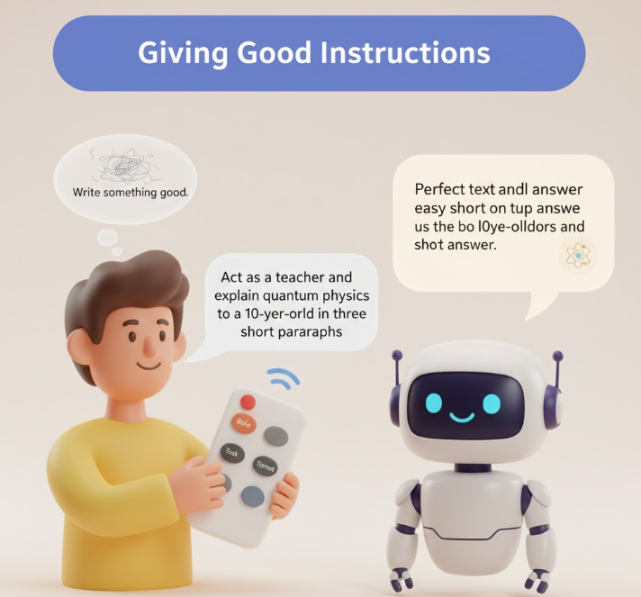
✍️ Introduction: The Power of Clear Instructions
If you’ve ever typed something into ChatGPT or another AI and gotten an answer that missed the mark, you know the struggle of vague instructions. Prompt engineering explained is all about crafting clear, structured prompts that guide AI to give the output you actually need. It’s like learning the secret language of AI — once you understand it, your productivity skyrockets.

📚 What Is Prompt Engineering?
Prompt engineering is the practice of designing and refining inputs (prompts) for AI models so they produce accurate, useful, and creative outputs. Large Language Models (LLMs) like ChatGPT interpret instructions literally — the better your prompt, the better the AI can help.
Why Structure Matters
- Context: Provide background so the AI understands your request.
- Clarity: Clear instructions prevent misunderstandings.
- Constraints: Limit outputs (e.g., word count, format, tone) to save editing time.
Example:
| Poor Prompt | Engineered Prompt |
|---|---|
| “Write an article” | “Write a 300-word blog post explaining prompt engineering in simple terms for beginners. Use bullet points for clarity.” |
AI Prompting Basics
- Instruction-based prompts: Tell the AI exactly what you want.
- Question prompts: Ask for specific information.
- Role-based prompts: Assign the AI a persona (e.g., “Act as a productivity coach”).
- Chain-of-thought prompts: Guide the AI to reason step by step.
⚡ How My Magic Prompt Helps
Crafting high-quality prompts consistently can be challenging. My Magic Prompt simplifies this workflow by:
- Offering pre-built prompt templates for blogs, emails, scripts, and more.
- Guiding you through prompt structure to improve clarity and output quality.
- Allowing you to batch prompts for faster, repeatable workflows.
Explore My Magic Prompt features to start generating better AI outputs today.
❓ FAQs: Prompt Engineering Explained
1. What’s the difference between a good and bad AI prompt?
A good prompt is clear, structured, and context-rich. A bad prompt is vague, leaving the AI to guess your intent.
2. Can beginners learn prompt engineering quickly?
Yes! Start with templates, observe outputs, and iteratively refine prompts.
3. How do I organize my prompts?
Use a prompt library or tool like My Magic Prompt to categorize, tag, and store prompts for reuse.
4. Do prompt engineering techniques vary by AI model?
Yes, nuances exist across LLMs, but core principles — clarity, context, constraints — are universal.
5. Can prompts save time on content creation?
Absolutely. Structured prompts reduce back-and-forth, streamline drafting, and enhance creativity.
6. Should I update prompts over time?
Yes. Iteratively refining prompts improves accuracy and adapts to new AI capabilities.
🤍 Soft CTA
Ready to level up your AI productivity? Explore My Magic Prompt to access templates, tools, and workflows that make prompt engineering simple and effective.