
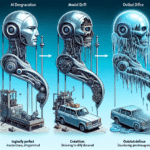
AI Model Performance Degradation Over Time
March 16, 2026
AI Orchestration Frameworks for Complex Projects
March 17, 2026
Designing AI Systems for Board-Level Transparency
AI transparency is no longer just a technical requirement—it’s a boardroom mandate. As organizations lean into AI for strategic decisions, executives and board members need clear, explainable insights from these systems. But how do you turn complex AI outputs into accessible, governance-ready reports?
Let’s explore practical frameworks and prompt strategies to bridge the gap between intricate models and the boardroom, ensuring your governance AI efforts deliver the clarity leaders expect.
Why Board-Level AI Reporting Matters
Board members carry the ultimate responsibility for organizational risk and strategy. When AI influences decisions, transparency is essential for:
- Building trust in automated recommendations
- Ensuring compliance with evolving AI governance standards
- Identifying and mitigating bias or errors
- Demonstrating accountability to stakeholders

Framework: Explainable AI Reporting for Executives
Here’s a simple, repeatable process for designing transparent AI systems that make sense at the highest level:
- Clarify Expectations: Identify what the board truly needs to know. Is it the logic behind recommendations, risk assessments, or compliance updates?
- Craft Executive-Friendly Prompts: Use prompt engineering to translate technical outputs into plain language summaries. Tools like My Magic Prompt can help generate prompts that explain AI decisions in business terms.
- Visualize Key Metrics: Present data with clear visuals—charts, dashboards, or annotated screenshots—to highlight trends and anomalies.
- Document Limitations: Include a summary of AI model boundaries, known biases, or data quality concerns.
Checklist: Building Transparent Board Reports
- Use prompts like: “Summarize this model’s decision process for a non-technical audience.”
- Highlight confidence levels and data sources.
- Flag any out-of-scope recommendations.
- Provide next-step recommendations (e.g., “What would improve this model’s transparency?”)

Prompt Engineering Tips for Board-Ready AI Insights
- Be directive: Specify the audience (e.g., “Generate a summary suitable for board reporting”).
- Request context: Ask for background info with each insight (“Explain why this recommendation was made”).
- Iterate: Refine prompts based on board feedback for continuous improvement.
- Automate: Use browser extensions like MagicPrompt AI Prompt Generator to standardize explainable reporting.
FAQ: AI Transparency, Board Reporting, and Governance AI
- What is AI transparency in board reporting?
- AI transparency means making AI-driven decisions and processes clear and understandable for non-technical leaders, supporting informed governance and risk management.
- How can prompt engineering improve AI transparency?
- Prompt engineering helps structure AI outputs in plain language, offering context, rationale, and limitations—making reports more actionable for executives.
- What are best practices for governance AI reporting?
- Best practices include summarizing decisions, visualizing key metrics, documenting risks, and regularly updating the board with explainable, audience-focused reports.
- How do I use My Magic Prompt for board-level reporting?
- Leverage My Magic Prompt to generate high-quality prompts that convert technical findings into executive summaries, ensuring your board reports are clear and compliant.
- Why is explainable AI important for compliance?
- Explainable AI supports regulatory requirements by documenting how models make decisions, which is critical for audits and stakeholder trust. Explore NIST’s AI Risk Management Framework for more guidance.
Explore Smarter Prompting for Transparent AI
Designing transparent AI systems for board-level reporting is an ongoing journey. With the right prompt strategies and tools, you can turn complex models into governance-ready insights. Ready to level up your process? Explore My Magic Prompt for inspiration and streamlined prompt engineering.