
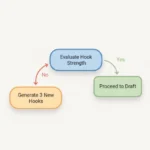
How to Turn One Prompt Into a Full Multi-Step Workflow
July 7, 2026
How to Build Prompt Systems for Community Managers
July 7, 2026
✍️ Introduction: Why Some Prompts Work and Others Don’t
Have you ever typed a prompt into ChatGPT, Claude, or Gemini, only to get a response that missed the mark? The difference between mediocre and high-performing prompts isn’t luck—it’s design.
When you understand prompt quality and apply best practices, you consistently get results that are accurate, creative, and actionable.

📚 Key Elements of a High-Performing Prompt
1. Clarity
A high-performing prompt communicates exactly what you want. Avoid ambiguity and use precise instructions.
- Bad: “Write something about marketing.”
- Good: “Write a 200-word LinkedIn post about the benefits of a prompt library for AI creators, using a friendly, professional tone.”
2. Structure
Break prompts into logical sections: context, task, and output requirements. Sequential prompts or multi-step workflows improve consistency.
3. Constraints
Set boundaries like word count, style, or format to guide output:
- Word limits
- Tone (friendly, professional, humorous)
- Format (bullet points, table, script)
4. Examples
Show the AI what you expect with examples. For instance:
“Example output: ‘5 key benefits of using AI prompts…’”
5. Tone and Voice
Explicitly state tone, audience, or persona to align outputs with your brand voice.
6. Input Variables
Use variables to make prompts reusable:
- {{Topic}}
- {{Target Audience}}
- {{Style}}
This is essential for creating templates that work every time.
7. Formatting
Formatting instructions help produce structured, easy-to-read outputs:
- Numbered lists
- Headings
- Tables
🔑 FAQ: High-Performing Prompt Insights
1. What makes a prompt high-performing?
Clarity, structure, constraints, examples, tone, and reusable input variables all contribute to better AI output.
2. Can one prompt work across different AI tools?
Yes, if you design it carefully and test formatting. Some adjustments may be needed for specific model behaviors.
3. How do I measure prompt quality?
Evaluate outputs for accuracy, creativity, readability, and alignment with your goals. Iterate until consistent.
4. Should I save my prompts?
Absolutely. A prompt library ensures you don’t lose high-performing prompts and makes your workflow repeatable.
5. How can I improve a mediocre prompt?
Add specificity, examples, output constraints, and structure. Consider turning it into a multi-step workflow.
🤍 Soft CTA
To create consistently accurate, creative, and actionable AI outputs, explore My Magic Prompt for ready-made templates, structured prompt builders, and a full AI toolkit to level up your prompt game.